
Artificial Intelligence is now appearing everywhere — in search engines, photo apps, email tools and even word processors. It was only a matter of time before it reached genealogy.
But what does AI actually mean for family historians? Is it transforming research, or simply speeding up what we already do?
The answer, as ever in genealogy, is: it depends how you use it.
What AI Really Is (And Isn’t)
AI in genealogy is not a thinking historian. It does not understand your ancestors. It does not evaluate evidence in the way a human researcher can.
What it does extremely well is:
- Recognise patterns
- Process large volumes of information
- Predict likely matches
- Summarise complex material
In other words, it’s a powerful assistant — but not an authority.
AI and Transcription
One of the most obvious benefits is transcription.
AI tools can now help read:
- Parish registers
- Census returns
- Wills and probate records
- Newspaper archives
- GRO indexes
For clear handwriting and good scans, the results can be impressive. But older records bring familiar challenges:
- Clerk abbreviations
- Latin phrases
- Unusual spellings
- Damaged or faded pages
AI speeds things up, but it still requires human checking. In fact, it can sometimes be overconfident in incorrect readings — which makes verification even more important.
Record Matching and Suggestions
Many genealogy platforms already use AI-style systems to suggest:
- Census-to-census links
- Birth–marriage–death connections
- Alternative spellings
- Possible parents or spouses
These suggestions are useful clues. They are not proof.
Common surnames, reused first names, migration and non-traditional family structures can all confuse automated systems. A suggestion that looks plausible may be entirely wrong.
As ever, we must ask:
- What is the evidence?
- Are the sources cited?
- Does this fit with everything else we know?
AI as a Research Assistant
Perhaps the most interesting development is not discovery, but organisation.
Tools such as NotebookLM allow you to upload your own documents — research notes, transcriptions, family histories — and ask questions about them.
For example:
- “What do we know about John Smith between 1841 and 1881?”
- “Where are the gaps in this timeline?”
- “Are there contradictions in these records?”
Because the tool works only from the material you provide, it reduces the risk of invented information. It can be particularly useful when dealing with complex family lines or long-running research projects.
In this sense, AI becomes less of a search engine and more of a structured thinking aid.
Writing Up Family History
Many genealogists enjoy the detective work but struggle with writing up their findings.
AI can help:
- Turn notes into readable prose
- Draft biographical sketches
- Adjust tone for different audiences
- Simplify complex explanations
However, there is a crucial rule: AI must not invent facts.
It is essential to separate:
- Evidence
- Interpretation
- Narrative
The conclusions remain the responsibility of the researcher.
Old Photographs and Enhancement
AI can also assist with:
- Repairing damaged photographs
- Sharpening faded images
- Grouping similar faces
- Estimating approximate dates from visual clues
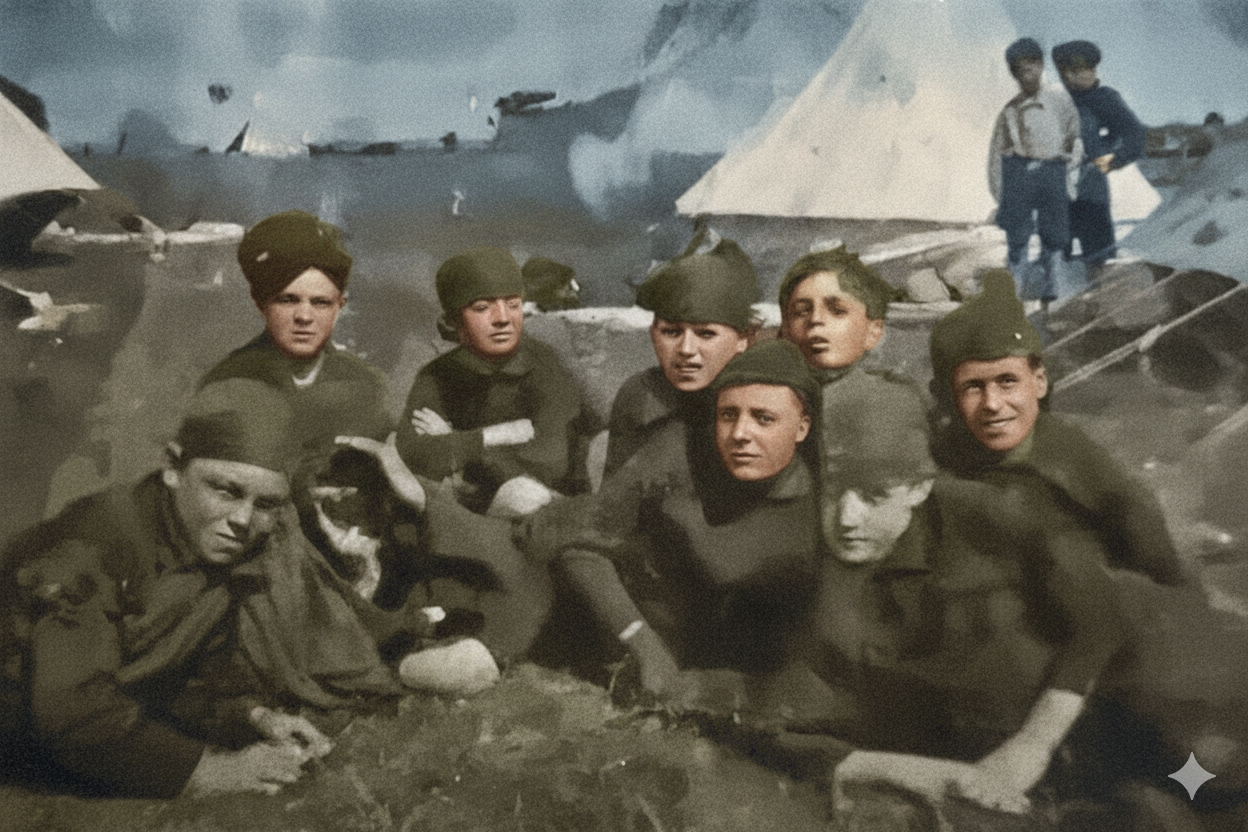
Colourisation tools are particularly striking. They can make images feel more immediate and accessible.
But colourisation is speculative. The colours are guesses. Without clear labelling, enhanced images risk misleading future viewers.
DNA and Pattern Recognition
In DNA research, AI-like systems are used to cluster matches and estimate relationships. These tools are helpful for managing complexity, but again they provide suggestions, not certainty.
The interpretation of DNA evidence still requires careful human judgement.
Bias, Limitations and Overconfidence
AI systems reflect the data they are trained on. They tend to favour:
- Common surnames
- Typical family structures
- Well-documented populations
They struggle with:
- Illegitimacy
- Name changes
- Migration
- Incomplete records
Perhaps the greatest risk is confidence bias. AI-generated answers often sound authoritative, even when incorrect.
As genealogists, we are trained to question sources. We must apply the same scepticism to AI output.
The Future of AI in Genealogy
Looking ahead, we are likely to see:
- Fully searchable handwritten parish registers
- AI-assisted research planning
- Smarter cross-platform record linking
- Personal genealogy “copilots”
What we are unlikely to see is AI replacing genealogical judgement.
Evaluating evidence, understanding historical context, and constructing reasoned arguments remain fundamentally human skills.
So, Should We Use AI?
Yes — but carefully.
AI is a powerful assistant. It can save time, reduce repetition and help us see patterns in complex material.
But genealogy remains a human discipline. It depends on:
- Critical thinking
- Evidence-based conclusions
- Transparency
- Intellectual honesty
Used thoughtfully, AI can enhance our research. Used uncritically, it can introduce new kinds of error.
As with any tool in family history, the key is not whether we use it — but how.
One response to “Artificial Intelligence in Genealogy: Helpful Assistant or Risky Shortcut?”
[…] a previous post I talked about how AI can help family historians with their research and the pitfalls that you need to look out for. In a later post I talked about […]