
When I started doing my family history in the late 1980s, pretty much everything was either paper-based or on microfilms. Giant ledgers giving you the possible key to a lost family member or finding the will of a grandparent. Then the wait while you requested the document and had it sent to you.
I remember standing shoulder to shoulder with other’s researching their families history in Somerset House in the heart of London. Piles of paper with me to record my findings so I didn’t repeat myself.
The Internet Changed That
Then along came the internet and the mass digitisation of records from births, marriages and deaths to Post Office Appointments to Probate records. You name it and someone seems to have scanned it and transcribed it.
This advance revolutionised family history research. You could now do much from the comfort of your own home without having to make long journeys to county records offices at the other end of the country.
It didn’t meant that things were cheaper, of course, as the subscriptions to access these records attest.
But what happens when the records you are interested in haven’t yet been digitised?
Visiting a Records Office
This is exactly the situation I found myself in when researching my great-grandfather Ernest William Thompson. Through a combination of online research and help from an AI chatbot I had made a lot of progress.
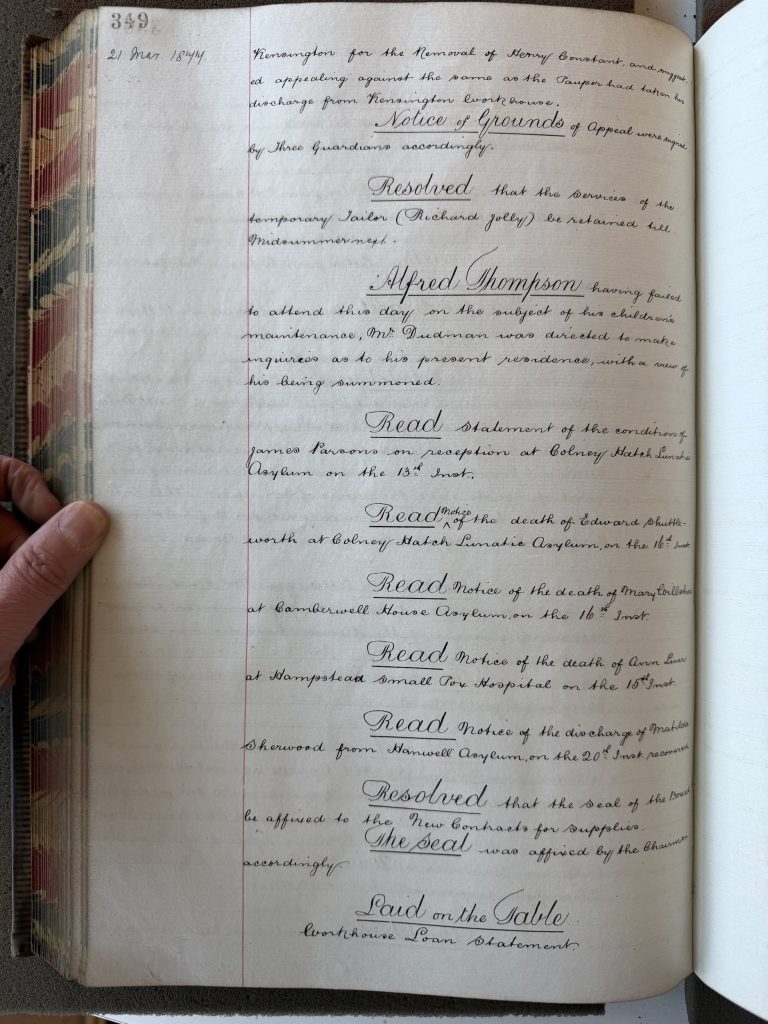
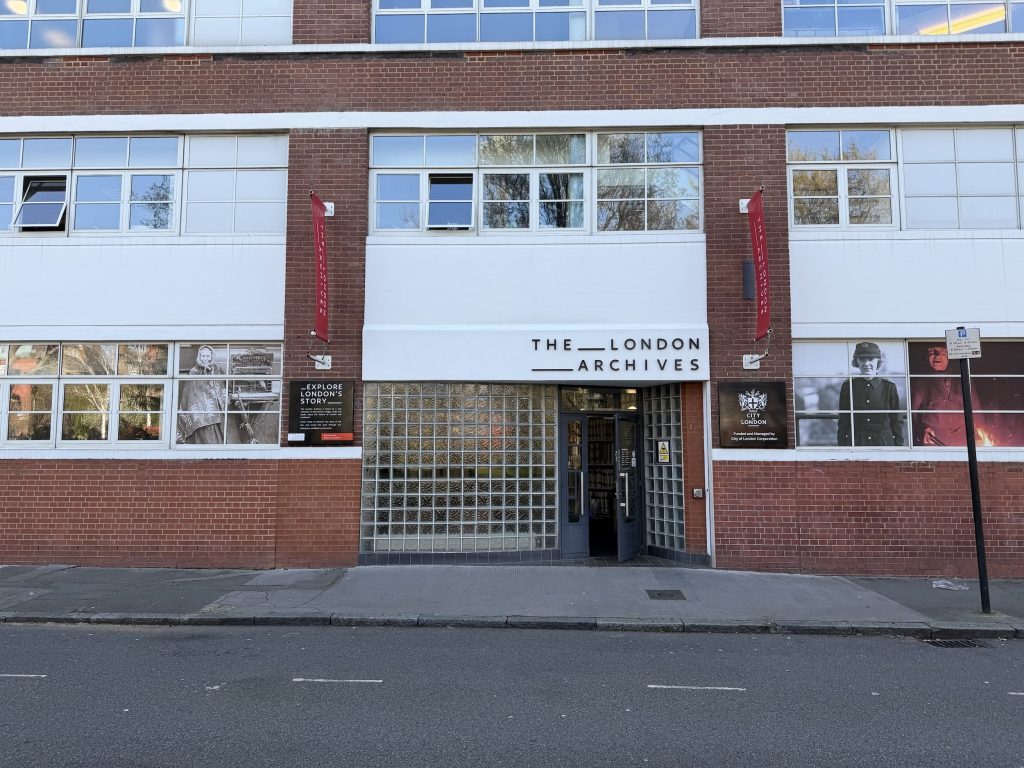
However, there was a lot more to do and the next stop were the minutes of the Paddington Board of Guardians, who ran the Paddington Workhouse that my great-grandfather ended up in. Unfortunately, these haven’t been digitised and so it required a trip to The London Archives where they reside.
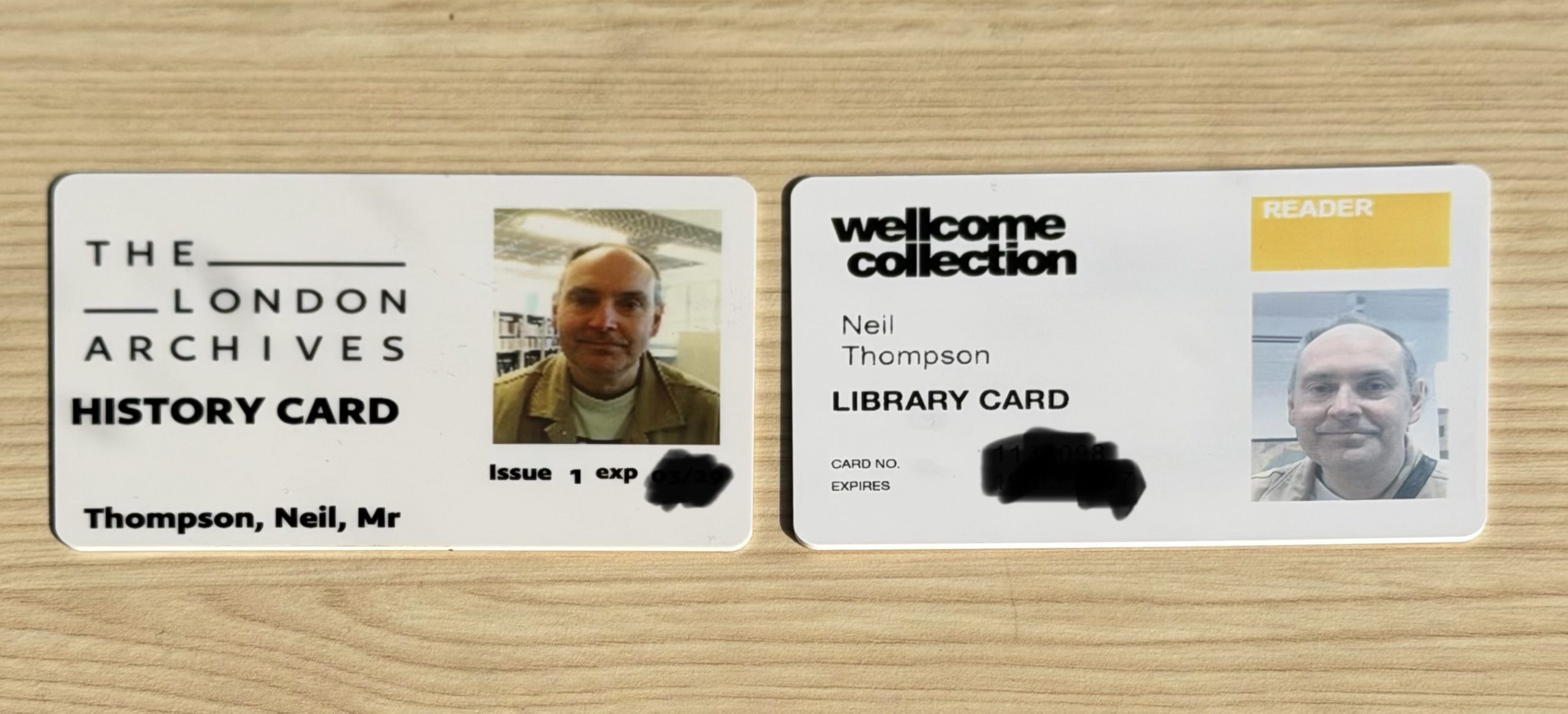
In order to view the records you need to first register for a readers card. There is a national scheme, called the Archives Card, that many local records office seem to subscribe to, but not the London Archives (nor the Wellcome Collection as we shall see). This meant signing up for yet another card and remembering to take with me two documents as proof of identity and address.
Into the Reading Room
You can’t just rock up and ask for the documents you want to view; these have to be reserved in advance – you can do this up to 14 days before your visit. There is an online catalogue that you can search and reserve the documents you require. If you do that they will be waiting for you on the shelf when you arrive.
You are limited on what you can take in to the reading room at The London Archives – no bags, pens etc. but you can take a pencil, notepad or even a tablet/phone for taking notes. There are free lockers to store anything you can’t take in.
Getting the documents is as easy as heading to the counter and asking for them. You’ll get given one at a time, or at least I was, as mine were several large volumes. Then you retreat to a table and carefully lay out your documents on the desk.
The Documents Themselves
Unsurprisingly, given the age of the documents I was looking at, they were a bit musty but the contents was clear enough, even though this was all hand written minutes. The tables have foam cushions on them that allow you to gently rest the books on them and protect the spine. Obviously, this isnt needed for photos and single documents.
One thing to note is that you cannot just take photos of the documents – there is a charge for doing so. I can’t remember exactly how much I paid but, I think, it was £7 for 15 photos and £35 for unlimited for the day. You really need to have an idea in advance of what you are going to need.
Also, even if you purchase a photo licence you cannot just snap away, you need to meticlously record everything you take a picture of and hand in those details at the end of your visit.
Compare and Contrast
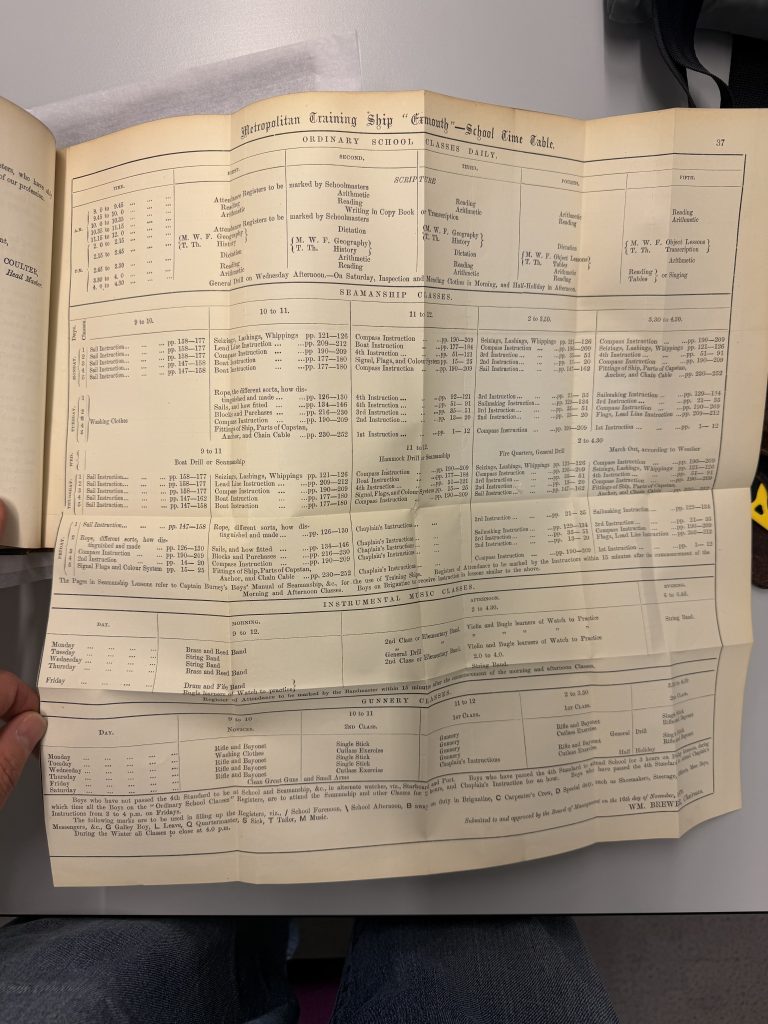
After I had finished at The London Archives I went on to the Wellcome Collection Library as they hold the records for the Training Ship Exmouth where my great-grandfather’s siblings were sent. This required yet another card application and showing of my proof of id. At least these cards last a number of years so I don’t have to worry about it again for a while.
The Wellcome Collection was less picky about what you could take in, although I only had a very small bag with me. I’m not sure you could take in much larger items. They were also less worried about taking of photos – I could take as many as I liked and didn’t have to record them either.
Like The London Archive you need to search for what you want and request it in advance again necessitating an account. The process is easy enough.
Was it worth it?
I went to the London Archives with the intention of trying to identify my great-great-grandparents, and I managed half of them! I now know the identity of my great-great-grandfather but not his wife. I also know that he did six months in prison for hitting his wife and then, on release, deserted both her and the kids. A reward of £2 was offered for his apprehension, but I haven’t to date found out if he was caught, but I am assuming not, given my great-grandfather spent until he was 15 in the workhouses.
So yes, I would say that the trip was very worthwhile, and I wouldn’t have got that information without the visit. There’s something to be said for the old school methods!
One response to “Doing Research irl”
[…] to get out of the house to do your family history research. I have already written about visiting the record offices in London and, yesterday, I travelled up to Kempton Racecourse for The Family History […]